Sprecher Russian Imperial Stout

February 8, 2010 Liquid Diets Leave a comment

Now that Sprecher seems to be getting more widely available in Kansas City, I don’t mind reviewing this previously obscure (for around here) beer so much! I actually purchased this bottle in Omaha, NE, a few months ago. A four-pack of Sprecher’s trademark 16oz bottles was something like $7!

Sprecher makes some really good beers. I used to associate the brewery with someone I didn’t particularly like from my past (who turned me onto the brewery), so I’m glad I’ve been trying more of their beers and rediscovering this superb Wisconsin brewery over the part few months!

This beer is from Sprecher’s Premium Reserve lineup. It is a Russian Imperial Stout (you can tell this because the brewery cleverly named it “Russian Imperial Stout”), which is a style of stout originally brewed in the UK with extra alcohol (higher gravity) and hops to be exported to the Baltic courts. The “imperial” designation comes from the rumor that these beers were especially popular with Russian royalty.

This is an extremely popular style of beer in the craft brewing scene and for good reasons… stouts are delicious, all sorts of adjuncts like fruits, coffee and chocolate can be added to play with the flavors, and they are fun to drink. What’s not to like?

I poured this beer into my large (16oz) nonic pint glass (the large pint glasses with the bulge near the mouth). The beer poured absolutely pitch black with just the faintest of red highlights in the very corners of the glass. The head was the brown color of the crema on an espresso, deep and rich and fluffy like shaving cream.

I got a little aroma of roast and maybe coffee initially, but once the head disappeared I couldn’t get anything for aroma, and this time I don’t think it’s my nose!

The beer is an easy drinker, with little carbonation and a smooth, silky mouthfeel. If I didn’t know better, I would think it has oatmeal in it because of the texture, but none is listed on the website. This beer weighs in at 32 IBU’s and 8.5% ABV, so it’s not a mammoth stout, but it’s no lightweight, either.

There is some sweetness and dry roast on the front end of the sip, while the hops sort of come in later in the sip from the sides and meet up for a big finish with a little bitterness from the roasted malts. This is a well-balanced beer, with a nice finish that isn’t too dry or too sweet. There are hints of chocolate in the flavor, too, but I don’t pick up any coffee-like flavors despite getting some on the initial aroma. A nice caramel flavor on the aftertaste.

As far as imperial stouts go, this is fairly one-dimensional when compared to something like Bell’s Expedition Stout, for example. I’d compare it more to something like Old Rasputin or even a standard stout like Anderson Valley’s incredible Barney Flatts Oatmeal Stout. That said, it’s a very enjoyable beer, very easy to drink and, after having only 1-2 beers in the past four weeks, something with a noticeable kick for my now lightweight status! This would be a good bar stout for when you’re socializing, not forcing you to think too hard about what you’re tasting. Another winner from Sprecher!

Founders Cerise

January 31, 2010 Liquid Diets 2 comments

I recently spotted some Founders Cerise at the Gomer’s in Parkville when I was up there a week or so ago. In my mind, this was going to be a cherry stout, like Bell’s, but of course, it isn’t. I’ve been eating a lot better lately, so this is the first beer I’ve had in several weeks.

Founders Cerise is made with tart Michigan cherries, and according to the website, five cherry additions are made at various times throughout the fermentation process for “the ultimate balance between tartness and sweetness.” The beer weighs in at 15 IBU’s and 6.5% ABV.

Cerise pours a cloudy reddish-pinkish-orangeish-brownish color (think dirty dishwater!) and I got very little foam that completely died down almost immediately. For being a cherry fruit beer, I get a little cherry on the nose, but really not much in the aroma.

The flavor, however, is all cherry! The first sip was sweet and tart at the same time, even getting a little pinch in the inside of my cheeks like I get from sour Belgians, although I don’t think there are any funky bugs in this beer to make it sour, rather that comes from just the cherries.

No hops to speak of, for me, which makes sense for a fruit beer where the fruit is the centerpiece. If I could think of a graphical representation for this beer, it is hits my tongue with a stripe of tart right down the middle wrapped in sweetness along the edges. It sounds weird, but I think you’ll know what I mean when you taste it! There is a nice amount of carbonation to give a touch of prickly sensation with each sip, but really this a lot like drinking a dry carbonated cherry juice.

The alcohol on this beer is virtually impossible to detect, and there is no medicinal or extract-y quality to this beer. I thought I was getting a hint of what seemed like coriander, to me (which makes no sense at all!), but as I sipped more it morphed into more of a vanilla flavor.

Cerise is delicious and an excellent example of how to do a fruit beer without making it go too far in one direction or another. True to the website’s claims, Founders really does strike a wonderful balance between the tart and the sweet. If you like cherries you’ll love this beer, and I think it would pair up great with chocolate desserts, chocolate, ice cream (vanilla, chocolate or cherry) or cheesecake. It could probably even be used in a reduction to pour over ice cream or cheesecake, and I dare to say this would be a great beer for an ice cream float, too! Another winner from Founders. YUM!

On a Health Kick

January 19, 2010 Liquid Diets 2 comments

Since I’ve moved to Kansas City I’ve gone out a lot, eaten at a lot of restaurants, etc and gained a fair amount of weight that I don’t particularly like, so I’ve been watching my diet, including cutting out empty calories (all things that would make it on the Liquid Diet!), so my posting has been non-existant as of late. For the next month or two, I’m probably not going to be drinking more than a beer or two a week, so I will try to make them things I haven’t reviewed before to give you something to read, and I apologize, but it has to be done!

Additionally, I have a few of my Wisconsin beer reviews from Fall to post, so that will give you something to look at, although none of those beers are available here, unfortunately.

I picked up some Lagunitas Brown Shugga recently, so that will probably be my next review. Stay tuned!

Categories: beer

What Would You Do With Two Left Hands?

January 7, 2010 Liquid Diets 1 comment

The answer, of course, is drink ‘em! Left Hand Brewing Company is a nice brewery out of Longmont, CO. Today I’m reviewing their classic Milk Stout, as well as a Vol. 1 of their new Fade to Black Series, an export stout. One of their most famous beers is their Milk Stout, a great example of the “sweet stout” style. The sweet stout style (also referred to as milk stouts or cream stouts) gets its designation from the addition of lactose to the beer. Lactose is an unfermentable sugar, so the yeast in beer that eats the sugars and poops alcohol (more or less) can’t do anything with lactose. As a result, the lactose sweetens the beer. Since lactose is the primary sugar found in dairy products, hence the “milk” and “cream” terms used to describe these stouts.

Left Hand’s version is a classic. The beer pours black (some very minute highlights in the very bottom of my snifter) and the off-white head disappears quickly. The aroma on this beer is awesome, smelling mostly of coffee and sweet chocolate. It’s one of my favorite aroma beers. Milk Stout weighs in at 5.9% alcohol and 25 IBU’s. The flavor is roasty malt with a silky mouthfeel that is shockingly similar to milk! The nice texture of the beer comes from a relatively low carbonation, the lactose, as well as some oats in the beer.

Milk Stout is difficult, for me, to drink slowly. The smoothness of the beer and it’s sweetness make it a chugger! As far as the sweetness goes, it’s not quite like a dessert beer, and there is some good bitterness from the roasted malts, but it still leans toward a sweet finish, as opposed to a dry stout. This would be great with ice cream and probably something like strawberries. I highly recommend this beer if you’ve never had it.

Fade to Black

In the past, Left Hand’s winter seasonal beer was always Snow Bound Spiced Strong Ale. This year, they decided to retire the beer and start a new series, called Fade to Black (reflecting the overall lack of sunlight from October through March). According to Left Hand, the name and packaging will be the same each year, but the style will vary. For the inaugural beer, Left hand chose an export style stout.

Export (or “foreign”) stouts are stouts that were originally brewed for export to foreign countries, particularly England’s colonies in the tropics. To survive the trip better, these beers are brewed for a higher gravity (more alcohol), which acts as a preservative. Export stouts can be of the dry or sweet style. Vol. 1 weighs in at 8.5%ABV, 30 IBU’s and according to Left Hand, “Pours black with licorice, espresso bean, molasses and black cardamom notes.” They also add the marketingspeak that the flavors “give way to a feeling of self-loathing, burnt opportunities and smoked relationships.” The overall marketing package of the Fade to Black series is a little unusual, with the dark imagery in the marketing language, the neo-tribal label and being named after a Metallica song about suicide, but maybe depression and suicide sell lots of beer!

Volume 1 poured, as you would guess, black as coal. No highlights to speak of in this beer. It’s opaque and black and despite a vigorous pour had a very small tan head that faded quickly (common for higher alcohol beers). The aroma on this beer is typical stout aroma, with roasty malt, maybe a little cocoa, and a subtle hint of smoke.

Contrary to the aroma, the first sip really nailed me with the smoke flavor. This is just like the smokiness that is found in a lot of Scottish ales, so I think it a smoky note from the deeply roasted malts, rather than the addition of any smoke flavoring agents or even smoked malts. The smokiness really comes through in the second half of the sip. This is a neat beer because the flavors seem to really “light up” different parts of my tongue, and they seem layered, almost as if the brewer designed one to develop after another.

The sip starts with a heavy mouthfeel, with some roastiness on the front of my tongue, then both sides of my tongue and cheeks seem to come alive with a good amount of bitterness (a little hop bitterness, but mostly from the roasted malts), and then the smoke rolls in and hits the back of my tongue and palate.

As with Scottish ales, the smokiness seems to die down with each subsequent sip as my palate fatigues. The beer is nice and smooth with a hint of carbonation, and for an 8.5% ABV the alcohol is not apparent at all. This is a fairly complex beer and well-suited to being drunk in quiet contemplation. I look forward to seeing what Left Hand thinks up for Fade to Black in 2010!

Categories: beer Tags: , , , ,

New Glarus Unplugged Berliner Weiss

January 7, 2010 Liquid Diets Leave a comment

© 2008 by Jesse Friedman

I have a snow day today (boy, Kansas City has been hammered this winter) and for later on (it’s only 10:00AM) I’m planning on drinking a couple/few stouts I have in the fridge, but in the meantime, this is a review of a beer I was lucky enough to have in Wisconsin when I was there in early October. It is the first Berliner Weiss I’ve drunk. The more I think about the great beers I had in Wisconsin that weekend, the more I hope that trip becomes an annual thing!

New Glarus Brewing Company is a fantastic brewery located not too far from Madison, WI. I greatly enjoyed their Spotted Cow and, of course, their world famous Tart Raspberry beers, both of which I reviewed previously and you can find if you enter “New Glarus” in the search bar (which is now located at the top right corner of the blog… hope you like the new look!).

One of the brewery’s series of beers is their “Unplugged” series in which, “A few times a year, we will cut Dan [Carey, master brewer] loose to brew whatever he chooses, uncensored, uncut, unplugged. Always handcrafted, this beer is brewed for the adventurous soul. This is a very limited edition and we make no promises to ever brew this style again.” In other words, the Unplugged beers are adventurous one-offs with limited availability. The main bottle shop I hit in Madison had quite a few of the Unplugged beers on hand, and I imagine if I lived up there these releases would be at the top of my “to get” list. The downside is when you fall in love with one of these beers, tough luck! Here is a list of past Unplugged beers, for your interest.

Berliner Weisse (not sure why New Glarus dropped the “e” from the end) is a style of beer that is traditional to Berlin, although according to the BJCP, only two traditional breweries there still make it. The style is definitely a sleeper, but a handful of breweries produce it and I believe Kansas City’s Westside Local has one of them available. In 1809, Napoleon referred to Berliner Weisse as “the Champagne of the North” because of it’s lively character and effervescence. Berliner Weisse is a pale, low alcohol, very bubbly wheat beer that is most notable because of fermentation with Lactobacillus delbruckii, a bacteria that is the bane of the wine (and most of) the beer industry. “Lacto” beers have a sharp sourness that, in my opinion, really adds to the refreshing character of an already thirst-quenching style.

Unfortunately, it has been a few months since I drank this beer, and my notes were sparse, to say the least. I was pouring the beer in a white plastic hotel cup, so the photo above gives you an idea of what it really looks like! I did note that the New Glarus beer smelled like a “normal sour beer,” which to me means a Flanders red or brown along the lines of Rodenbach, La Folie, etc. These beers are “infected” purposefully with two bugs that create some acetic acid, giving a sharp sourness with a lot of vinegar (acetic acid) notes. I remember being mildly disappointed that, after quite a while of searching for a Berliner Weisse to try, it was simply going to taste like any number of other widely available sour beers I’ve already had.

That impression changed with my first sip, however. While the nose seemed to carry some vinegar-y notes, the flavor was less sour/enamel stripping as something like La Folie (and probably less tart than Rodenbach, in my opinion), but it was smoother and carried some different flavors like sour grapes and lemon. The finish was dry, and there was tons of carbonation. There was some characteristic “Belgian funk” in the flavor, too, but really it was an awesome beer. At low alcohol (most tend to be well below 5%, usually in the 3-4% range), a ton of carbonation, and a light tartness, this beer would be an excellent summer refresher and a great session beer, if you could get enough of it! I imagine it could pair well with some cheeses, too, with the carbonation really lifting the fats off the palate.

A New Look for 2010

January 3, 2010 Liquid Diets 1 comment

As much as I hate to give up the nifty Bigfoot bottle 2009 bottlecap header from 2009’s theme, I figured 2010 deserves a new look to the site. I think this one is super clean and easy to read, so while it’s a little on the sterile side I think it’s a nice look. Let me know what you think!

Categories: Uncategorized

Goose Island Oatmeal Stout – First Post of 2010

January 3, 2010 Liquid Diets Leave a comment

Well, the new year is here, and it’s time to drink some beer! I had a fun, but relatively unfortunate New Year’s Eve, where I drank Miller Lite (OMG, I seriously can’t drink this crap anymore), mostly in big gulps for the playing of Flip Cup and Beirut (like Beer Pong, only you throw the ball instead of using a paddle). All in all, I found out I excel at both sports, and the one good thing about that yellow crap is that it IS light and it is low in alcohol, so drinking a ton of it like I did is easy. Unfortunately, it tears my stomach up like you wouldn’t believe. Now that that’s behind me, let’s look at some better beer to start 2010!

If you’ve been reading my blog for any amount of time, you know I can’t do a write up of a stout without mentioning Goose Island’s incredible Bourbon County Stout. It is one of my all-time favorite beers. I’m sure I’ve had their regular Oatmeal Stout, but never in the context of a review, so here’s a revisit of this beer to see how it stands up.

Oatmeal stouts are stouts that have oatmeal in the grain bill. The addition of oatmeal is mainly to give the beer a “slick” (some say slimy) texture/mouthfeel. Some people can taste the oats, but I have yet to find a “calibration beer” to help me recognize what oats in beer taste like, so for me, it’s a texture, not a taste thing.

Goose Island’s Oatmeal Stout pours black, almost opaque, except it has some dark ruby highlights if you hold the glass up to light. The head is a fluffy tan color.

You know my nose doesn’t work so great, but I am definitely picking up on SOMETHING on the aroma… I can’t quite place it… something in the burnt sugar/toffee/caramel neighborhood… maybe a little raisin-y, too? I just can’t quite place the aroma, but it’s nice and “warm.”

The beer has a surprising amount of carbonation, almost coming off a little prickly to me. Nice roasted malt flavor on the front end that carries into the aftertaste. The finish is really dry on this, almost a little chalky or ashy. The beer may be a little cold, although Goose Island recommends it be drunk at 40°F. I tend to like my stouts at almost room temperature, which for me is upper 50’s-low 60’s.

With larger gulps of the beer I get a pretty good amount of bitterness, too. It’s tough for me to tell whether that bitterness is from the roasted grains or hops, but I think it might be a little of both. The mouthfeel is nothing special, and the dry finish borders on being astringent, almost.

This is not a bad stout, by any stretch, but as stouts are one of my favorite styles, I have gone out of my way to drink a lot of them, and I have some really good ones in the fridge right now, so this is a solid stout, but nothing that is terribly special. It’s a good beer and I would like to pair it up with some food at some point, but otherwise, there are better oatmeal stouts to be had out there with a lot more character.

Categories: beer Tags: ,

Monk’s Cafe Sour Flemish Ale

December 27, 2009 Liquid Diets 2 comments

When I first heard of sour beers on Craft Beer Radio the only thing I could think of was “gross.” Greg and Jeff assured us listeners that they were great, though, and Greg went so far as to say that in his experience, no one has ever regretted drinking a sour beer with his encouragement. So, a year and a half or so ago I tried a Rodenbach from Lukas (I don’t see it on the shelf there anymore. Grrrr….) and I’ve been hooked since. Whether it’s the sour Rodenbach (never reviewed it here?), the enamel-stripping La Folie (New Belgium), or the wonderful, smoothly sour Berliner Weiss from New Glarus’ Unplugged series (review forthcoming), true to what CBR said, I have liked them all. So, it was with much pleasure that I bought a single of Monk’s Cafe Flemish Sour Ale from Tipsy’s in Merriam (when I checked out, the gal on the register commented, “Boy, that is one expensive little bottle of beer.” For the record, it was only $2.50, a steal by any standards!)

I couldn’t find out tons of info about this beer, other than that it is contract brewed by Brouwerij Van Steenberg in Ghent, Belgium, for Monk’s Cafe, a Belgian restaurant/beer place in Philadelphia. According to the bottle it is a mix of old and new brown ales, and the Beeradvocate site labels it an oud bruin or Flanders brown style. Sour beers are most frequently mixed from old and new vintages to get a nice balance of character and sourness.

The Sour Flemish Ale poured with tons of carbonation, just like a Coke! The head didn’t stick around too long, and I got a big whiff of vinegary sourness right off the bat, several inches from the glass! The aroma was all vinegar goodness with undertones of maybe a little cherry and some caramel. I was really thirsty when I drank this (these tend to be good thirst-quenchers), and I waited until this intro was written before I took my first sip!

Wow! Not what I expected! Not nearly as sour as I thought it was going to be, based on the aroma, and my first sip had a lot of cherry in it, although I don’t see a mention of being brewed with any cherries. Even the aftertaste on that first sip is really of cherry. There is certainly some sourness here, but with La Folie being the most sour beer I’ve ever had and maybe New Glarus Tart Cherry being the least (as far as “tart” or sour beers go), I’d give this a 3-4 2.

I’d call this sour more of a “tartness” and it really doesn’t even give me that “cheek pucker” sensation I get from really sour beers, but it’s good, don’t get me wrong! Really a lot of fruit in the flavor, and the tartness kicks in about 40% into the sip and rides out quickly in the aftertaste. This beer has a nice mouthfeel and is fairly sweet, which sounds strange for a tart beer, but the brewers are really walking a fine line with this beer between sour and sweet.

I like this beer, but it wasn’t as sour as I was hoping for. It’s a nice beer, and would be a great intro beer if you’re new to the sour styles. This would be nice with a dessert, I think, maybe something like cheesecake? Overall a big winner, especially for $2.50 for a 12 oz bottle, but if you’re looking for a really sour beer, look elsewhere. That said, this is a great drinker and a nice thirst-quencher, even if it doesn’t melt my face off.

Categories: beer Tags: , , , ,

Merry Christmas!

December 24, 2009 Liquid Diets Leave a comment

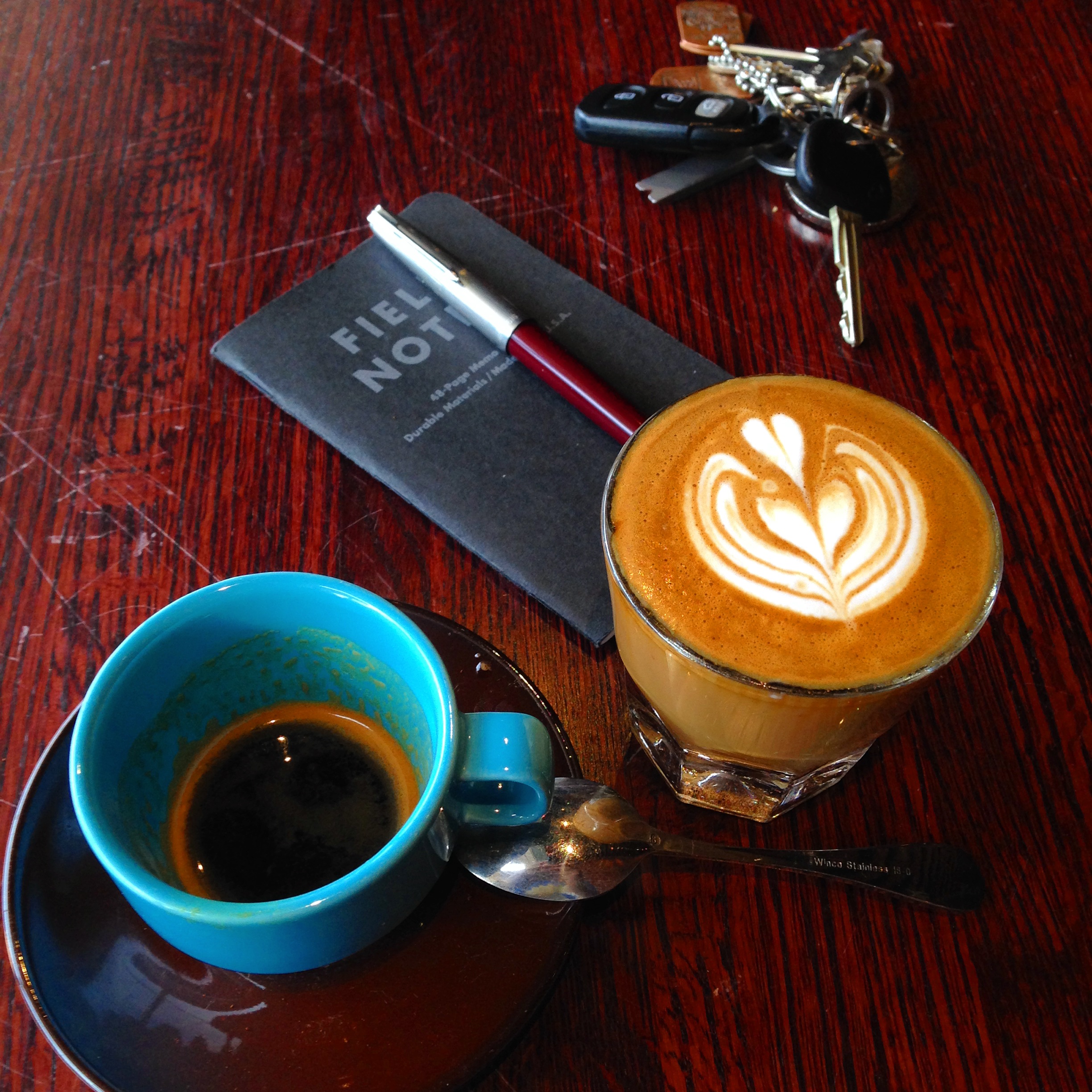
No, unfortunately my morning coffee on Christmas Eve isn’t going to look like the photo (is that amazing, or what?), but it’s still going to be a tasty treat I’m looking forward to mightily. It’s ridiculously dark and depressing outside, I’ve had the week off, and my girlfriend is home sick. I’ll be indoors working around the house all day, so why not start it off right with, as the Italians say, a little bit of “corrected” coffee?

In Italy, un caffé corretto is a shot of espresso with a shot of liquor, typically sambuca, brandy or grappa (I shudder to think). My version is a little less hardcore and a little more coffee to enjoy, but encompasses three of my favorite things: booze, espresso and coffee.

It’s a Shot in the Dark corrected with a mini-bottle of Starbucks creamy coffee liqueur, which to the best that I can tell, is basically like Bailey’s in a different bottle. They were selling these for about 99 cents last time I was at Lukas, so I picked a few up.

My Shot in the Dark is a shot of Broadway Café espresso in a cup of organic Broadway Café French pressed coffee. It takes a while to hand-grind my beans (both sets of them), boil my water, brew the coffee, etc, but what else do I have to do on Christmas Eve morning? Add the bottle of Starbucks liqueur and voilá!

Isolation Ale

December 22, 2009 Liquid Diets Leave a comment

I’m a fan of Colorado’s Odell Brewing Company, greatly enjoying their Double Pilsner and St. Lupulin, both reviewed here, as well as most of their other beers that I had pre-blog. Since it is winter, it seemed appropriate to try Odell’s winter warmer, Isolation Ale.

The winter warmers, often called Christmas beers, are a popular, but varied style, comprising everything from something malty and slightly sweet to beers spiced with aromatic “holiday” spices such as nutmeg, mulling spices, or dark fruits, citrus peel, etc. As varied as winter warmers can be, they get their name from the “warming” effect of a higher alcohol content, something shared among most beers in this style.

Not much information can be found on Odell’s website other than that Isolation Ale comes in at 29 IBU’s and 6% ABV. Odell claims Isolation Ale is a “traditional winter brew” made from malts that are imported from England. Interestingly, somewhat against the style, Isolation Ale is not spiced and is a fairly simple, straightforward beer.

The beer pours a nice dark tea color with redding highlights. Bringing the glass up to light, I could see a lot of sediment in suspension. The head was off-white and of a shaving cream consistency. I didn’t get a whole lot from the aroma (as usual, stupid nose!), but what aroma I did perceive was of a light, floral hoppiness, again somewhat against this style, which tend to be very lightly hopped. The aroma wasn’t like a hop bomb, keep in mind, but I could definitely detect them in the nose.

The flavor was more malt-forward, with the hops serving to add slight bitterness and mainly balance. The malt character leaned more toward the bready side of things, especially in the aftertaste. If I didn’t know better, I would have thought I’d just eaten a slice of artisanal bread! The mouthfeel on this beer is really good, with well-hidden carbonation and a nice heavy body. This is a fairly one-dimensional beer, but it is well balanced and a pleasure to drink.

It may lack some of the complexity you would think of in a beer designed to be enjoyed sitting next to a fire in a log cabin (well, that’s what I think of when I consider this style), but it does have a bready, malty character that is well-balanced, something I often find missing in other beers like doppelbocks, for example, which tend to be too sweet and cloying for me. I think Odell’s Isolation Ale would pair nicely with some of the heavier holiday foods, such as sweets, cheeses and roasts, and I think the spices that may be found in those dishes, especially the cloves in a ham and pumpkin pie spices, for example, would really complement the flavors in this beer.

Categories: beer Tags: ,